
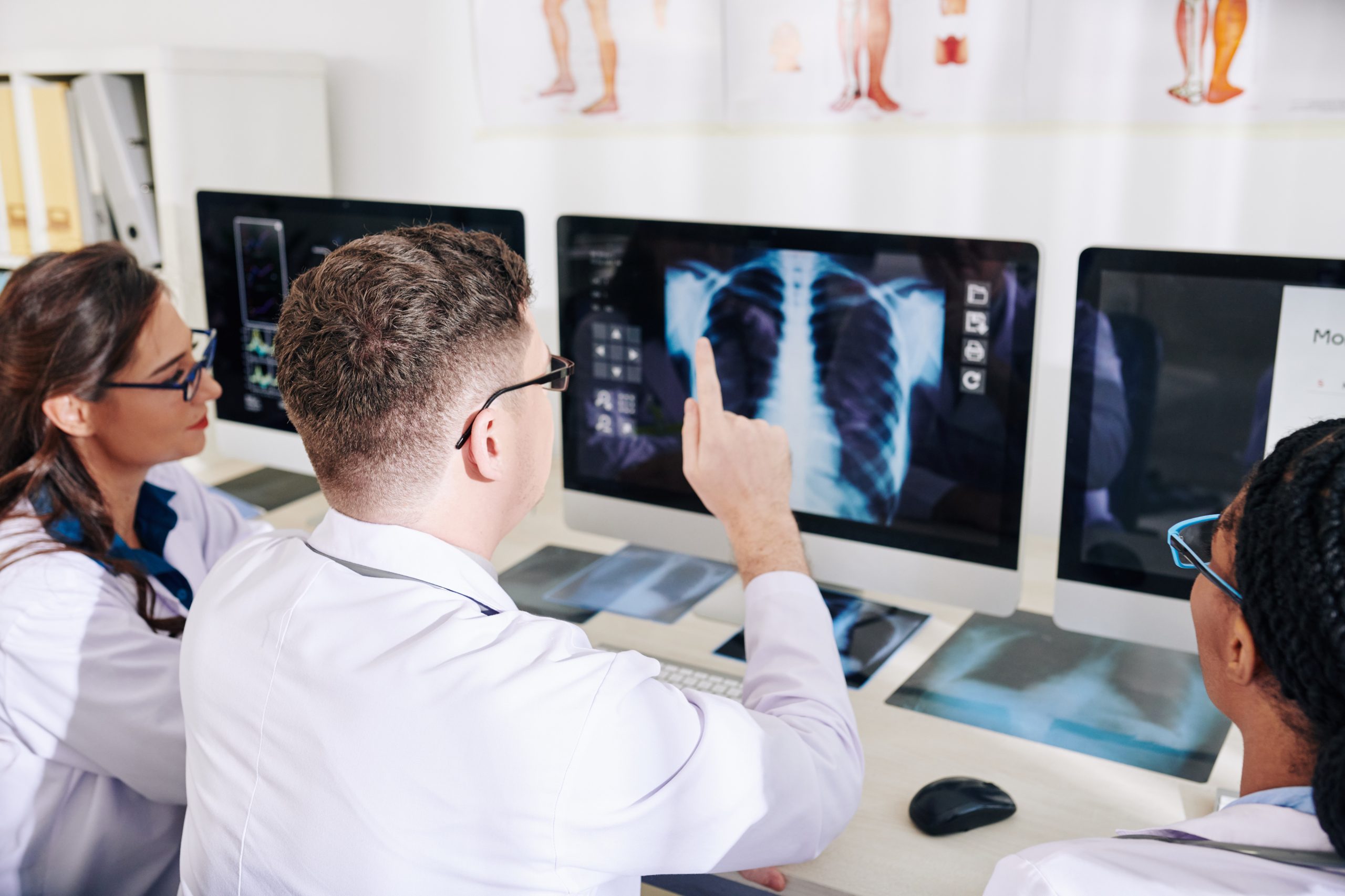
Choosing the correct scan early helps clinicians answer the right clinical question with clarity and appropriate urgency. Medical Imaging supports diagnosis and treatment planning by revealing internal anatomy in a safe, structured, and clinically governed way. This guide explains how X‑ray, ultrasound, CT, and MRI differ, and when each modality is typically considered.
At M&D Radiology, founded by Dr Mejag Jansen Van Rensburg and Dr Dewald Bester, the team performs imaging based on clinical referral and patient needs. In addition, clear communication and appropriate preparation help patients feel informed and supported throughout the process.
Healthcare Imaging: Indications and clinical scenarios
Clinicians select Healthcare Imaging by matching symptoms, examination findings, and urgency to the modality that best answers the referral question. As a result, imaging reduces uncertainty and helps guide treatment decisions with evidence rather than assumption. However, no single test fits every situation, so clinicians consider patient factors, risks, and prior investigations.
X‑ray: fast assessment for bones and chest
X‑ray often supports first‑line assessment when clinicians suspect fractures, joint alignment problems, or chest concerns requiring rapid evaluation. In addition, it can help confirm device placement and monitor specific conditions over time when clinically appropriate. Clinicians use dose‑optimized protocols and limit exposure to the area of interest.
Ultrasound: real‑time imaging for soft tissue and flow
Ultrasound helps evaluate many abdominal, pelvic, and soft‑tissue concerns without ionizing radiation. Meanwhile, Doppler ultrasound assesses blood flow, which supports vascular clinical questions and follow‑up planning. Clinicians also use ultrasound guidance for selected procedures when they need accurate needle placement.
CT (Computed Tomography): cross‑sectional detail for urgent decisions
CT is useful when clinicians need detailed cross‑sectional anatomy, especially in trauma, lung, abdominal, or vascular assessments. As a result, CT often supports time‑sensitive decision‑making because scanning can be fast and comprehensive. When contrast is clinically indicated, teams assess relevant safety factors before proceeding.
MRI: detailed soft‑tissue contrast for complex structures
MRI provides high soft‑tissue detail, which supports assessment of the brain, spine, joints, and many neurological or musculoskeletal concerns. However, MRI requires careful screening for certain implants, devices, or metal fragments because the scanner uses strong magnetic fields. Clinicians choose MRI when detail matters more than speed, and when the referral question benefits from soft‑tissue contrast.
Radiological Imaging: Preparation and what to expect
Your referring clinician provides the starting point, because the referral describes the clinical question and guides the most suitable protocol. In addition, booking staff may ask about implants, prior surgery, allergies, kidney function, or pregnancy, depending on the requested scan. Meanwhile, simple preparation steps often include wearing metal‑free clothing and removing jewelry before scanning.
However, preparation differs across modalities, so patients should follow the department’s instructions for fasting, hydration, or contrast use where applicable. Patients can also bring prior reports or images, because comparison helps radiologists describe change over time. If anxiety, pain, or mobility limitations could affect positioning, mention this early so staff can plan comfort measures.
Medical Scan Technology: Procedure steps, safety and comfort
Medical Scan Technology varies by modality, yet each examination follows structured protocols designed to produce diagnostic images safely. For X‑ray and CT, staff optimize dose and collimate to the relevant anatomy, which reduces unnecessary exposure. Meanwhile, ultrasound avoids radiation and relies on sound waves, although mild pressure may be needed for clear views.
MRI avoids ionizing radiation, but it requires thorough metal screening and clear communication throughout scanning. In addition, departments provide ear protection and two‑way communication, which supports comfort during longer MRI protocols. When contrast is clinically indicated, teams follow safety screening to ensure suitability for the patient’s clinical context.
Results and reporting: communication to the referring clinician
After the scan, a radiologist interprets images in the context of the referral question and relevant clinical information. In addition, radiologists may compare current images with prior studies to clarify progression, stability, or response to treatment. The radiology team then communicates results to the referring clinician, who integrates imaging with examination findings and other investigations.
However, imaging does not replace clinical assessment, so patients should discuss results and next steps with their referring clinician. Meanwhile, when imaging reveals findings requiring urgent attention, escalation pathways help clinicians respond appropriately. This workflow supports continuity of care and clear responsibility across the treating team.
Referral pathways and access: radiology Johannesburg and Hoedspruit radiology
Imaging is performed based on clinical need and clinician referral, so the most appropriate first step is a consultation with your doctor. In addition, a clear referral improves scan selection and protocoling, which can reduce delays and repeat testing. For an overview of available modalities and services, click here.
For professional standards and ethical guidance relevant to healthcare communication, see the HPCSA Regulations and Ethics. Meanwhile, patients and referrers can access imaging support through the Johannesburg Surgical Hospital site and the Hoedspruit Private Hospital site, based on referral pathways. As a result, patients looking for radiology Johannesburg, imaging services, or Hoedspruit radiologyan follow a consistent, clinically governed process.
FAQs
Do I need a referral letter for every scan?
In most cases, yes. A referral helps clarify the clinical question, confirms clinical need, and ensures the correct protocol is selected. In addition, it provides relevant background, such as symptoms, prior surgery, or suspected diagnoses, which supports accurate reporting.
What should the referral include to avoid delays or repeat imaging?
Referrers can reduce delays by including a clear clinical question, relevant history, examination findings, and prior imaging details. Meanwhile, noting red flags, suspected diagnoses, and any relevant blood results (where applicable) can help protocol the scan appropriately.
Can I have imaging if I’m pregnant or possibly pregnant?
If pregnancy is known or possible, inform your referring clinician and the radiology team as early as possible. In addition, the clinician will weigh clinical need and consider modalities that do not use ionizing radiation where appropriate, while ensuring the referral remains clinically justified.
What if I have an implant, pacemaker, or metal in my body?
Tell the booking team and complete the safety screening honestly and fully. MRI, in particular, requires careful implant screening because of strong magnetic fields, while CT and X‑ray involve ionizing radiation and different safety considerations. As a result, the team can confirm suitability and adjust protocols safely.
How do I know if my scan should be urgent?
Urgency is determined by your clinician based on symptoms, examination findings, and risk factors. However, if symptoms worsen, new red flags appear, or your clinician indicates urgency on the referral, notify the radiology booking team so scheduling can reflect clinical priority.
Conclusion
Choosing the right scan is a shared process between the patient, the referring clinician, and the radiology team. Medical Imaging works best when the referral question is clear, preparation is appropriate, and communication remains consistent throughout the pathway. If you are comparing options for radiology Johannesburg, imaging services, or Hoedspruit radiology, begin with a clinical assessment and referral. Speak to your doctor to determine whether this scan is clinically appropriate.
Information provided is educational and not a substitute for medical advice. Imaging is performed based on clinical need and clinician referral. Results are communicated to the referring clinician.